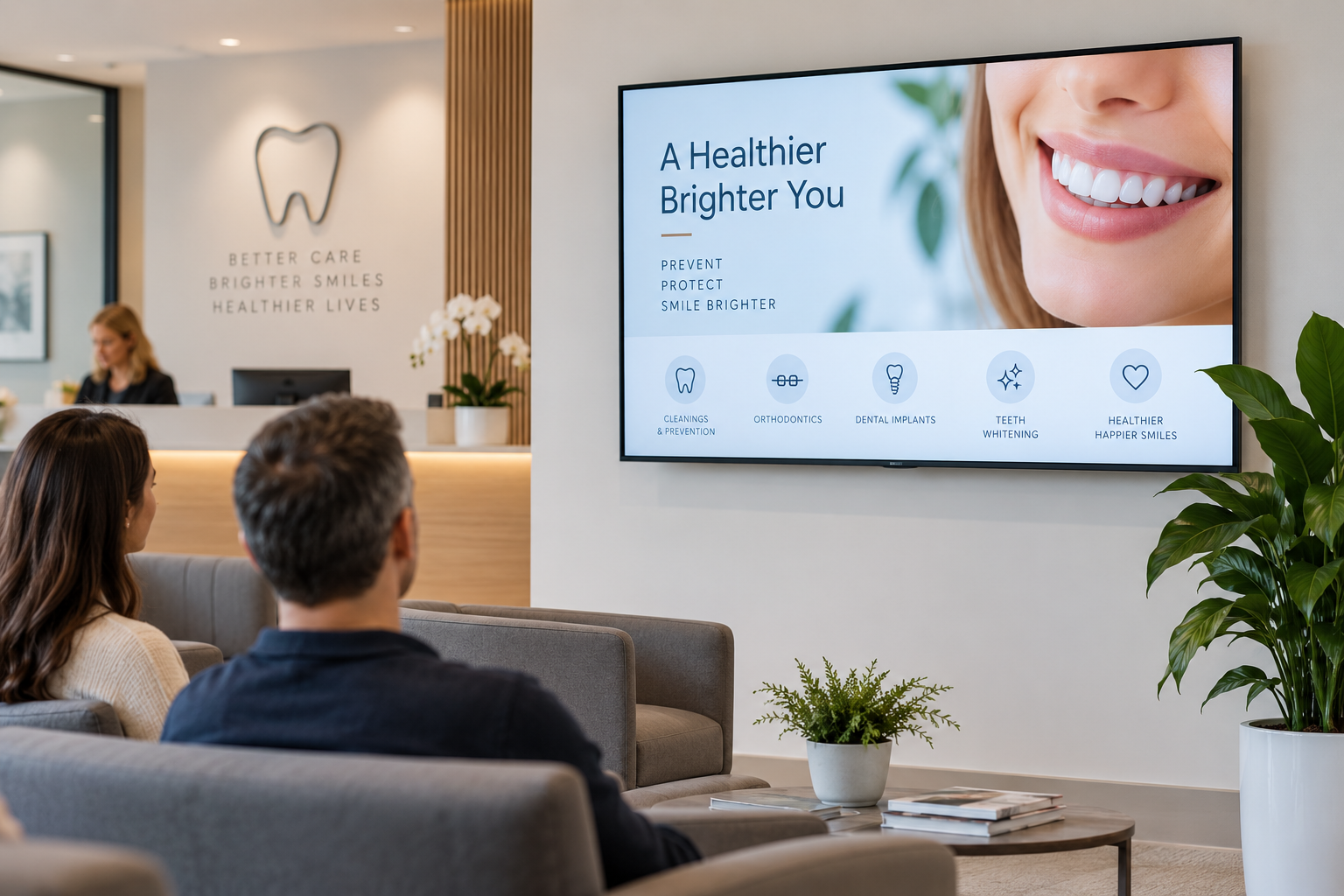
Quick answer: Patients wait an average of 13 minutes in the dental waiting room, and digital signage turns that time into engagement. Screens generate conversations about the treatments you offer, explain procedures and insurance clearly, and promote your services, which lifts case acceptance and referrals. Practices see a 83% increase in orthodontic referrals annually, 40% of patients say displays help them decide on procedures, and a 34% increase in sales for advertised services over a year. A plug and play HDMI player makes any TV a waiting room display in under 90 seconds.
What is digital signage for dental practices?
Digital signage for a dental office is any screen, from a waiting room display to an operatory monitor, run by cloud software instead of printed brochures. Instead of a rack of leaflets nobody reads, you show a pre licensed, customizable dental video library and practice content that educates patients and starts conversations about care, updated from one dashboard.
How does waiting room signage help a dental practice?
It uses time you already have. With an average 13 minute wait, a screen that explains treatments and showcases services turns idle minutes into interest. Engaging waiting room content sparks questions patients bring to the chair, so the clinical conversation starts warmer and case acceptance improves. It is the difference between a patient who has never heard of a treatment and one who walks in already curious about it.
What should you show on dental office screens?
Five kinds of content cover most practices:
- Waiting room displays. Turn wait time into engagement with educational content, practice updates and a pre licensed video library.
- Operatory screens. Reassure and inform patients chair side with procedure visuals and aftercare guidance.
- Procedure education. Explain treatments from whitening to gum disease and tooth decay with a cohesive content library.
- Insurance and coverage info. Help patients understand their coverage and financing options on screen before they ask.
- Service and product promotions. Promote orthodontics, whitening and the products you sell to the right patients at the right time.
Does digital signage increase case acceptance and referrals?
The numbers point that way. Practices using dental signage see an 83% increase in orthodontic referrals annually, 40% of patients say displays help them decide on procedures, and advertised services see a 34% increase in sales over a year. The mechanism is simple: patients discover services they did not know were available, understand procedures better, and feel clearer about coverage, so they say yes more often.
How does it handle insurance and coverage questions?
By answering them before they are asked. Explaining insurance and financing options clearly on screen helps patients understand their coverage in the waiting room, which reduces front desk back and forth and removes a common reason patients hesitate on treatment.
How much does dental digital signage cost?
Item | Typical cost |
|---|---|
Software (per screen / month) | $10 to $20 |
HDMI media player (one time, per screen) | about $100 to $200 |
Display / TV | Use a screen you already own, or about $300 to $1,200 for a commercial display |
Most practices start with one waiting room screen and add operatory monitors as they see patients engage. Screenfluence runs on 99.99% uptime with an offline cache, so the screen keeps playing even if the office network drops.
Frequently asked questions
How does digital signage help a dental practice?
It turns the average 13 minute wait into engagement, generating conversations about treatments, explaining procedures and coverage, and promoting services, which lifts case acceptance and referrals.
Does dental signage actually increase treatment acceptance?
Practices report a 83% increase in orthodontic referrals annually, 40% of patients saying displays help them decide on procedures, and a 34% increase in sales for advertised services over a year.
What should a dental waiting room screen show?
Educational content and a pre licensed dental video library, procedure explanations, insurance and coverage information, and promotions for services like orthodontics and whitening.
Can it help explain insurance and financing?
Yes. Showing coverage and financing options clearly on screen helps patients understand their options before they ask, which reduces front desk questions and hesitation.
Is it easy to set up in a small practice?
Yes. A plug and play HDMI player turns any TV into a display in under 90 seconds, and you manage everything from one dashboard.
How much does it cost?
Software is a transparent $10 to $20 per screen per month, plus a one time media player of about $100 to $200 per screen. You can use a screen you already own.